
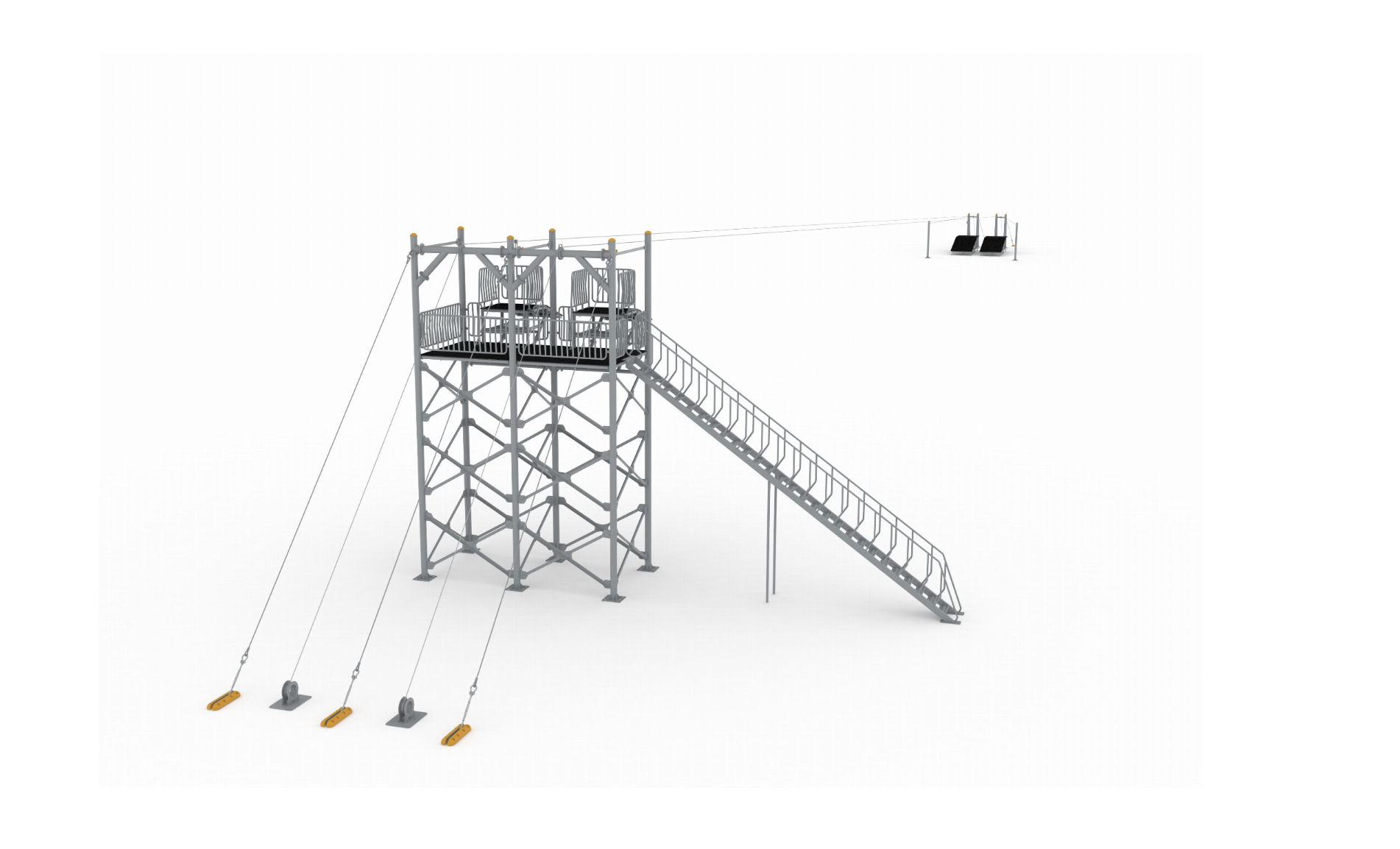
In recent years, zipline courses have become a favorite attraction for adrenaline enthusiasts, taking their place among the must-have features of modern recreational areas and international tourism destinations. Offering an exciting experience for both children and adults, ziplines can, however, pose serious risks if not properly installed. For this reason, compliance with global safety standards and the use of professional installation solutions are essential when setting up a zipline course. Today, global urban projects increasingly demand certified adrenaline structures to build active, next-generation public environments.
How Is a Zipline Course Installed?
Installing a zipline involves much more than stretching a steel cable — it’s a carefully planned, multi-stage engineering process.
Site selection and topography analysis
The area’s slope, length, and natural conditions must be thoroughly assessed. Courses typically start from a hill or elevated platform and end at a secure, high-performance landing area.
Soil analysis and engineering calculations
The ground where the zipline poles or load-bearing platforms will be installed must be structurally analyzed for load-bearing capacity. Without solid engineering calculations, the course could compromise both user safety and long-term durability.
Material and hardware selection
Steel cables, connectors, and advanced braking systems must fully comply with international safety standards. All mechanical components should be certified and tested for maximum reliability under harsh weather conditions.
Professional installation phase
Expert installation teams ensure cables are tensioned correctly according to professional tensioning metrics, and all connection points are secure. Each step must include thorough, real-time safety testing.
Load testing and regular inspection
Once installation is complete, the entire zipline course undergoes rigorous static and dynamic load tests. Regular structural maintenance and periodic inspections are vital to guarantee long-term operational safety.
Integrate High-Security Adventure Tracks into Your Global Projects!
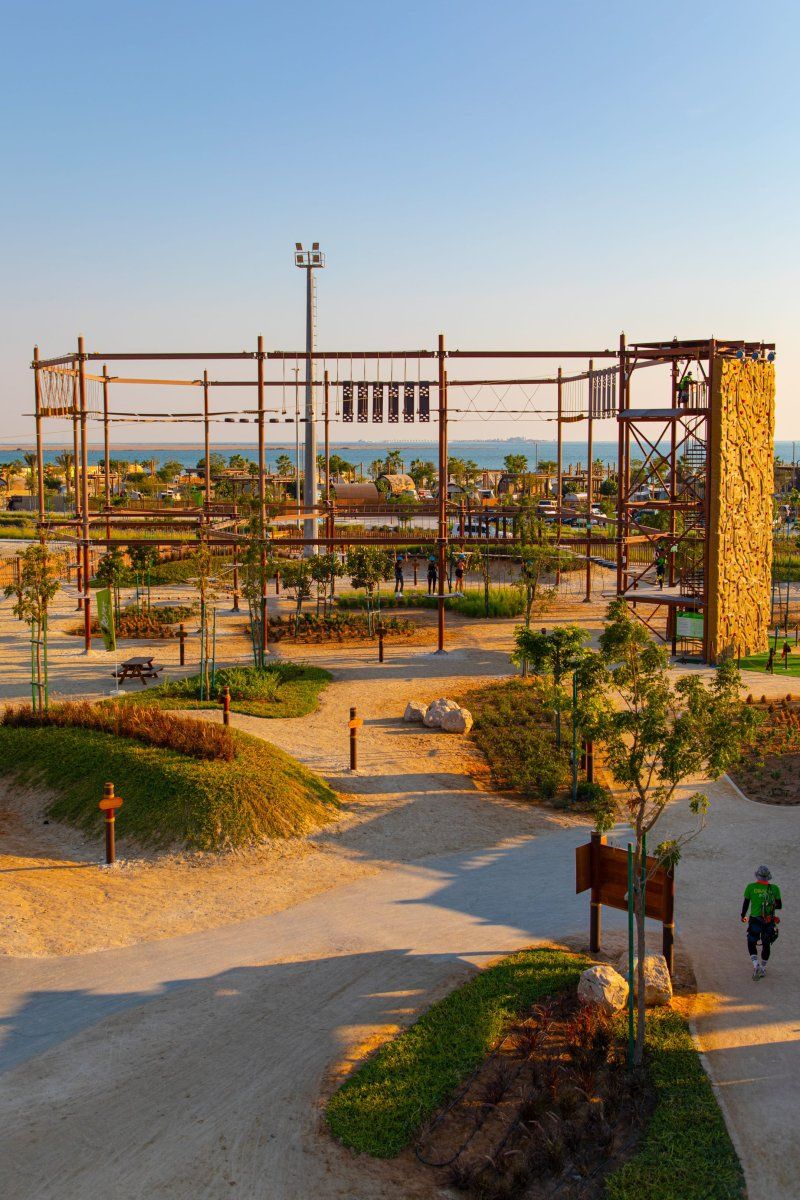
We add premium value to urban recreation and landscape developments with internationally certified zipline lines, rope courses, and active sports modules. Explore our engineered structures designed for architects and private operators.
Explore Adventure Park Solutions →Essential Safety Measures in Zipline Tracks
To guarantee uncompromising user safety, every professional zipline course must follow strict operational precautions:
-
Certified helmets and full-body harnesses are mandatory at all times.
-
Professional staff and trained operators should supervise the course continuously.
-
Strict weight, height, and age limits must be observed for safety compliance.
-
Magnetic or spring braking systems and landing platforms should be checked regularly.
-
The surrounding drop zone should be clearly enclosed with high-durability safety barriers.
The Role of Ziplines in Public and Regional Recreation Spaces
Ziplines are much more than independent recreational features — they enhance the appeal, modern architecture, and identity of public spaces. For municipalities, regional parks, and commercial tourism facilities, professional zipline tracks represent a strategic investment that drastically increases visitor engagement and boosts overall site value.
Especially in thematic children’s parks, integrated adventure environments, and large-scale recreation zones, zipline courses contribute significantly to physical development and balance reflexes while fostering healthy social interaction.
Cemer’s Safety-Driven Engineering Approach
As a global pioneer in outdoor solutions, playgrounds, active sports fields, and urban furniture, Cemer prioritizes international EN safety standards in all its projects. In high-security applications like zipline lines and high rope courses, Cemer’s manufacturing and design expertise provide municipalities, landscape planners, and contract businesses with dependable, long-lasting solutions.
Cemer’s Key Advantages in Adventure Environments:
-
Full compliance with international EN 1176 and related safety standards
-
Use of anti-corrosive, highly durable, and certified materials
-
Ergonomic and aesthetic design principles that blend seamlessly with natural urban layouts
-
Custom project, structural scale, and region-based engineering support for municipalities and private operators
When properly designed and installed, zipline courses add exceptional energy and active dynamics to urban life while allowing users to explore their physical boundaries safely. Yet such high-adrenaline projects must always be executed with professional engineering, strict safety compliance, and expert manufacturing supervision.
For municipalities, urban planners, and commercial developers, Cemer stands as a trusted manufacturing partner — delivering safe, modern, and visually impressive zipline areas, next-generation adventure parks, and international-standard extreme sports equipment solutions that bring lasting value to city life.