
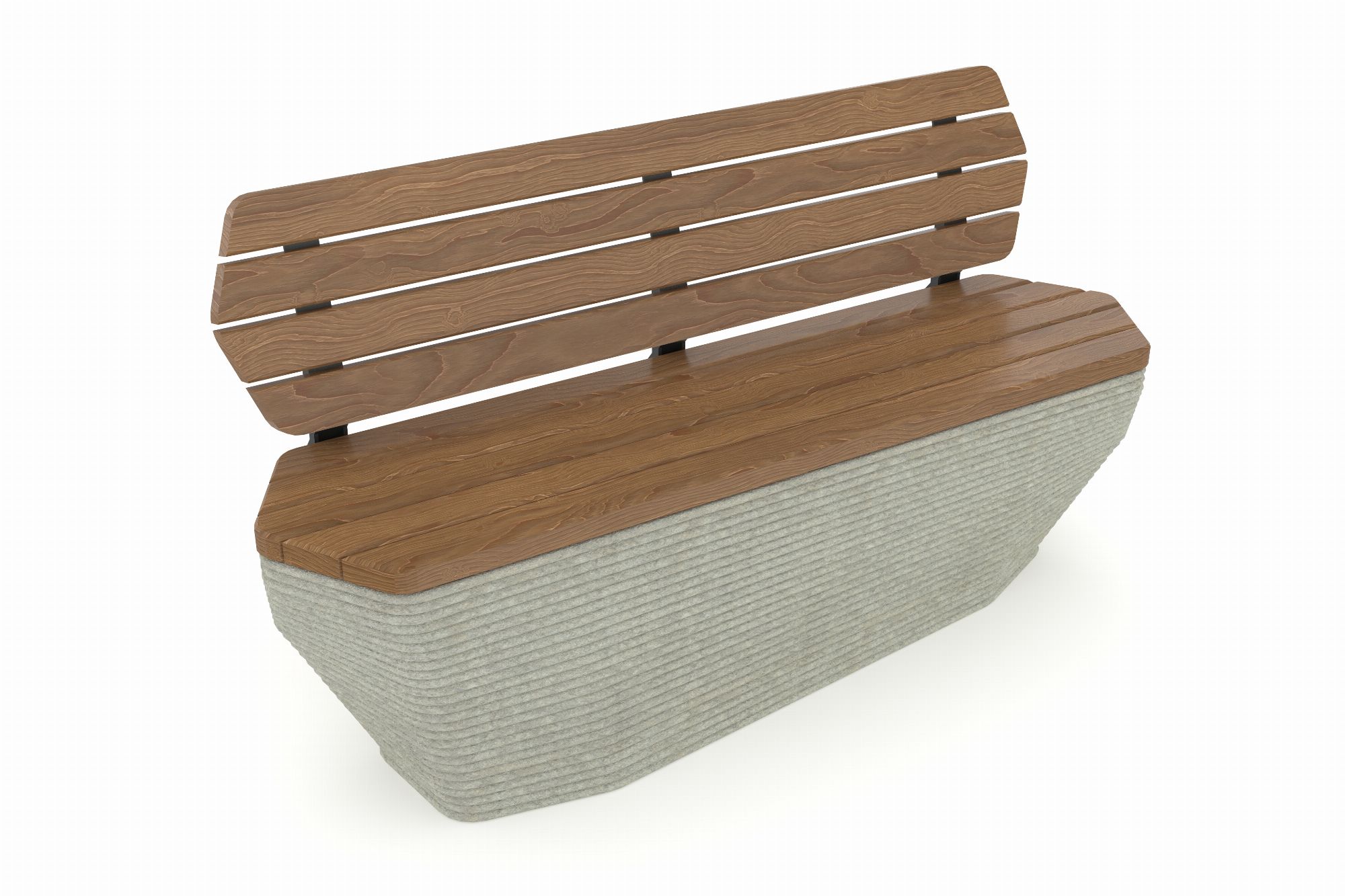
The Scutoid Series: Revolutionizing Urban Landscapes with 3D Printed Modular Concrete Furniture
The Scutoid Series represents a groundbreaking approach to outdoor furniture, harnessing 3D concrete printing technology to create modular benches and planters that redefine urban equipment design through innovative geometric solutions.
The Power of Scutoid Geometry
The foundation of this revolutionary furniture series lies in the unique scutoid geometric form, recently discovered by scientists studying biological structures. This shape's remarkable ability to create seamless corner connections between modular elements allows benches and planters to connect flawlessly, creating continuous flowing arrangements that appear as unified installations.
This geometric precision enables urban planners to create complex, visually striking arrangements while maintaining structural stability and functional integrity that public spaces demand.
3D Concrete Printing Innovation
The manufacturing process showcases the transformative potential of 3D concrete printing technology in urban furniture production. This advanced method offers unprecedented creative freedom, allowing designers to realize complex geometric forms impossible with traditional concrete casting.
The eco-friendly concrete formulation incorporates sustainable materials that enhance weather resistance while minimizing environmental impact. The 3D printing process optimizes material distribution, reducing waste and costs without compromising durability or aesthetic appeal.
Modular Design Philosophy
The modular nature represents a paradigm shift from static installations toward dynamic, adaptable systems that evolve with changing space requirements. Each element functions independently while maintaining perfect compatibility with other series components, enabling endless configuration possibilities.
The seamless connection system ensures that complex arrangements maintain visual unity and structural integrity, with corner connections flowing so naturally that multi-piece installations appear purposefully designed as single units.
Aesthetic and Functional Excellence
The visual impact extends beyond functionality, creating furniture that serves as sculptural elements in urban landscapes. The unique geometric form creates interesting shadows and light patterns throughout the day, adding dynamic visual interest to public spaces.
Concrete surfaces can be customized with various textures, finishes, and colors, allowing installations to reflect local aesthetic preferences while maintaining consistent geometric principles.
Versatile Applications
Parks and Recreation Areas: Create varied seating arrangements accommodating different group sizes, with integrated planters adding natural elements and visual boundaries.
Urban Plazas: Define spaces within larger public areas, guide pedestrian movement, and establish focal points or quiet zones.
Commercial Spaces: Professional appearance and customization make the series ideal for corporate campuses, educational institutions, and healthcare facilities.
Transit Areas: Efficient space utilization in constrained areas while providing comfortable seating and attractive plantings.
Durability and Sustainability
The exceptional durability of 3D printed concrete construction withstands demanding public use conditions while maintaining appearance and functionality. The modular design enables individual element replacement without affecting entire installations, minimizing maintenance costs and disruption.
Integrated planter systems include drainage and root management features protecting concrete structure while supporting healthy plant growth, creating sustainable green elements that enhance environmental value.
Economic Benefits
The series offers compelling value through lower lifecycle costs, superior performance, and aesthetic appeal. Concrete durability reduces replacement frequency, while modular nature allows reconfiguration rather than complete replacement as needs change.
Local 3D printing production reduces transportation costs and supports economic development while ensuring rapid delivery and flexible installation scheduling.
Future of Urban Design
The Scutoid Series exemplifies the future direction of urban equipment design where advanced manufacturing, sustainable materials, and creative thinking converge to serve immediate practical needs and long-term urban development goals.
As cities face increasing density and environmental challenges, modular systems offer scalable solutions that adapt to changing requirements while maintaining essential quality and durability for public infrastructure.
Conclusion
The Scutoid Series demonstrates how innovative thinking and advanced technology can transform everyday urban elements into extraordinary contributions to public space quality. By combining scutoid geometry with 3D concrete printing possibilities, this modular system offers powerful tools for creating distinctive, functional, and beautiful outdoor environments that support community interaction, environmental stewardship, and urban beauty.