



The Power of Natural Materials: Benefits of Wooden Playgrounds for Children and the Planet
In today's rapidly urbanizing world, children's opportunities to connect with soil, trees, and natural textures are diminishing every day. For a new generation growing up in "concrete jungles," playgrounds have become one of the most vital gateways to nature. But how does the type of material used in these areas transform a child's play experience? Here are the unique advantages that wooden playground equipment offers for both children and the environment.
1. Sustainability for the Future: Returning from Plastic to Nature
While the production of plastic and metal materials requires high energy consumption, wood is a completely renewable resource. Wooden playgrounds help reduce the greenhouse gas effect in the atmosphere by sequestering carbon.
-
Low Carbon Footprint: Timber sourced from sustainably managed forests provides an eco-friendly lifecycle.
-
Recyclability: Once a wooden play unit reaches the end of its lifespan, it can be recycled or biodegraded without harming nature.
2. Texture as an Educational Tool: Sensory Development
Wood is not just a building material; it is a living organism. When children touch wood, they don't feel the coldness of metal or the artificiality of plastic; they feel the warmth of nature.
-
Tactile Stimulation: The grained structure of wood, with its varied rough or smooth surfaces, enhances children's sense of touch.
-
Thermal Comfort: Wood does not overheat like metal under the sun, nor does it reach a brittle coldness like plastic in winter. This ensures that children can play comfortably and safely in all seasons.
-
Scent and Visuals: The natural scent of wood and its organic color tones help lower children's stress levels, facilitating a more focused and peaceful playtime.
3. Durability and Urban Aesthetics: Timeless Designs
The perception that "wood rots quickly" has been entirely left behind thanks to modern technology. Today, with specialized pressure-treatment (impregnation) techniques and protective methods, wooden playgrounds withstand the harshest outdoor conditions for many years.
-
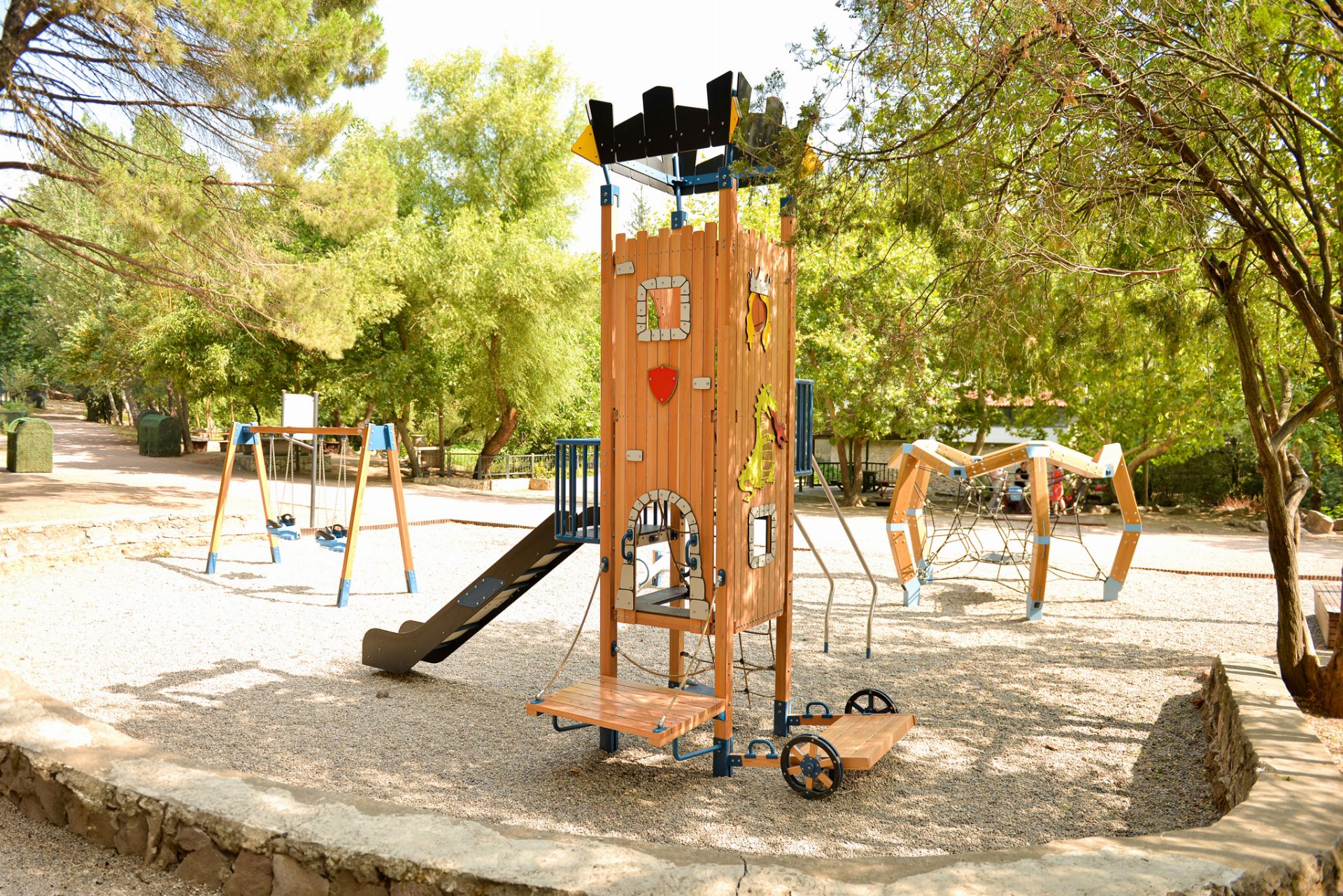
Architectural Harmony: Wooden structures provide a visual integrity with the trees and vegetation within a park. They add a warm and inviting aesthetic to the gray fabric of the city.
-
Safety and Health: Properly processed wood possesses anti-static properties (no static electricity buildup) and serves as a safe haven, being free from chemicals that could harm children's health.
Conclusion: The First Bridge to Nature
A playground is more than just a collection of slides and swings; it is a child's first laboratory for discovering the world. Choosing wooden playground equipment is not only about providing a safe play area for our children, but also about instilling a love for nature and environmental awareness from their very first steps.
It is in our hands to make our cities more livable and our parks more natural. Remember; a child who grows up touching nature will be the adult who protects the nature of tomorrow.