CA 1900
Logo

Freestanding Playground Equipments / Modular Climbing Playgrounds

CA 1900
Modular Climbing Playgrounds

Product Information

Dimensions (W x L x H):5.30 x 8.15 x 2.60m
Age Group:5+
Capacity:17
Fall Height:2.00 m
Safety Area:70.10 m²

Activities

Hanging
Balance
Crawling
Cooperation
Running
Sitting
Climbing

Skill Experiences

Physically
Cognitive
Social
Sensory
Product

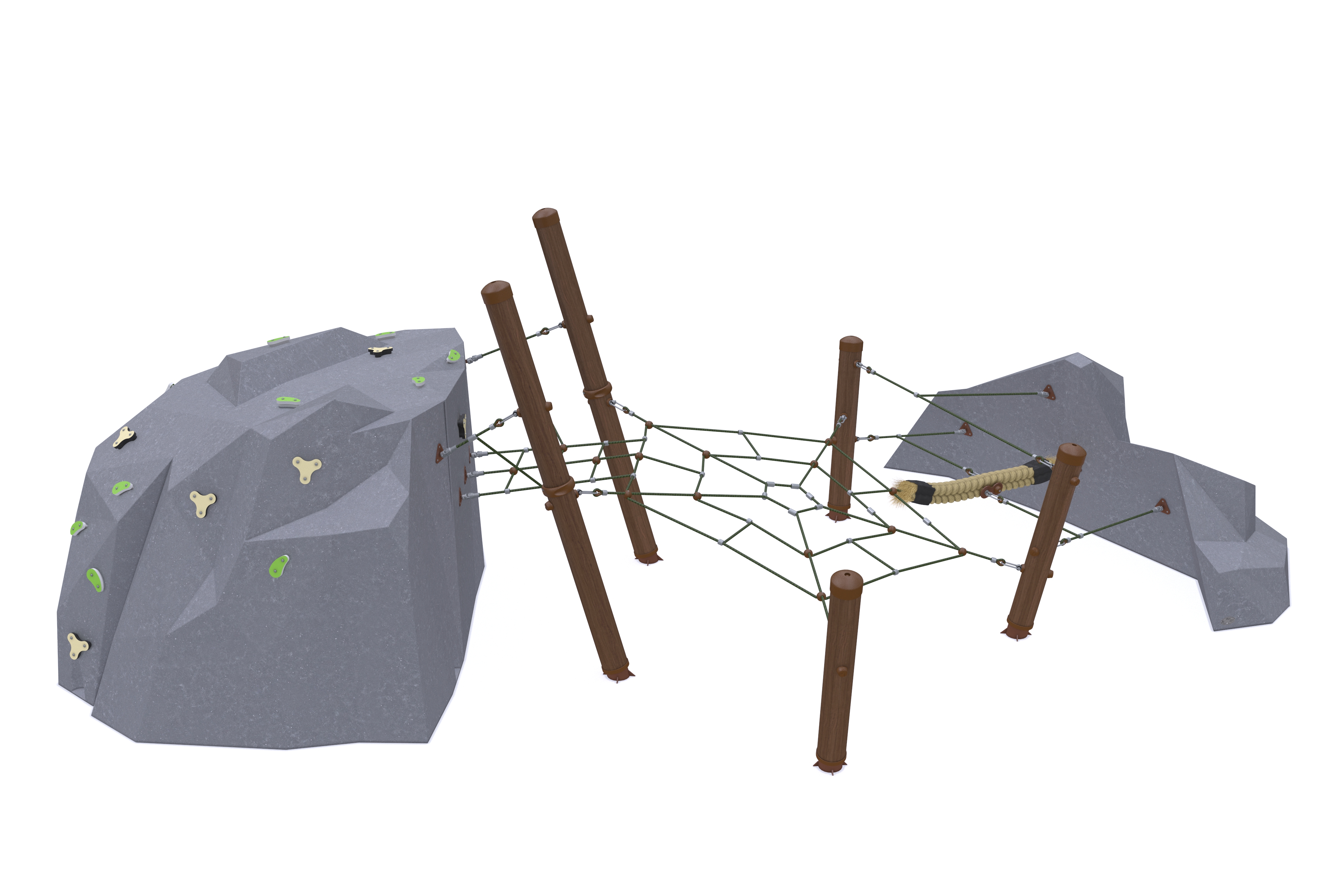
TUNGSTEN CLIMBING - CA 1900

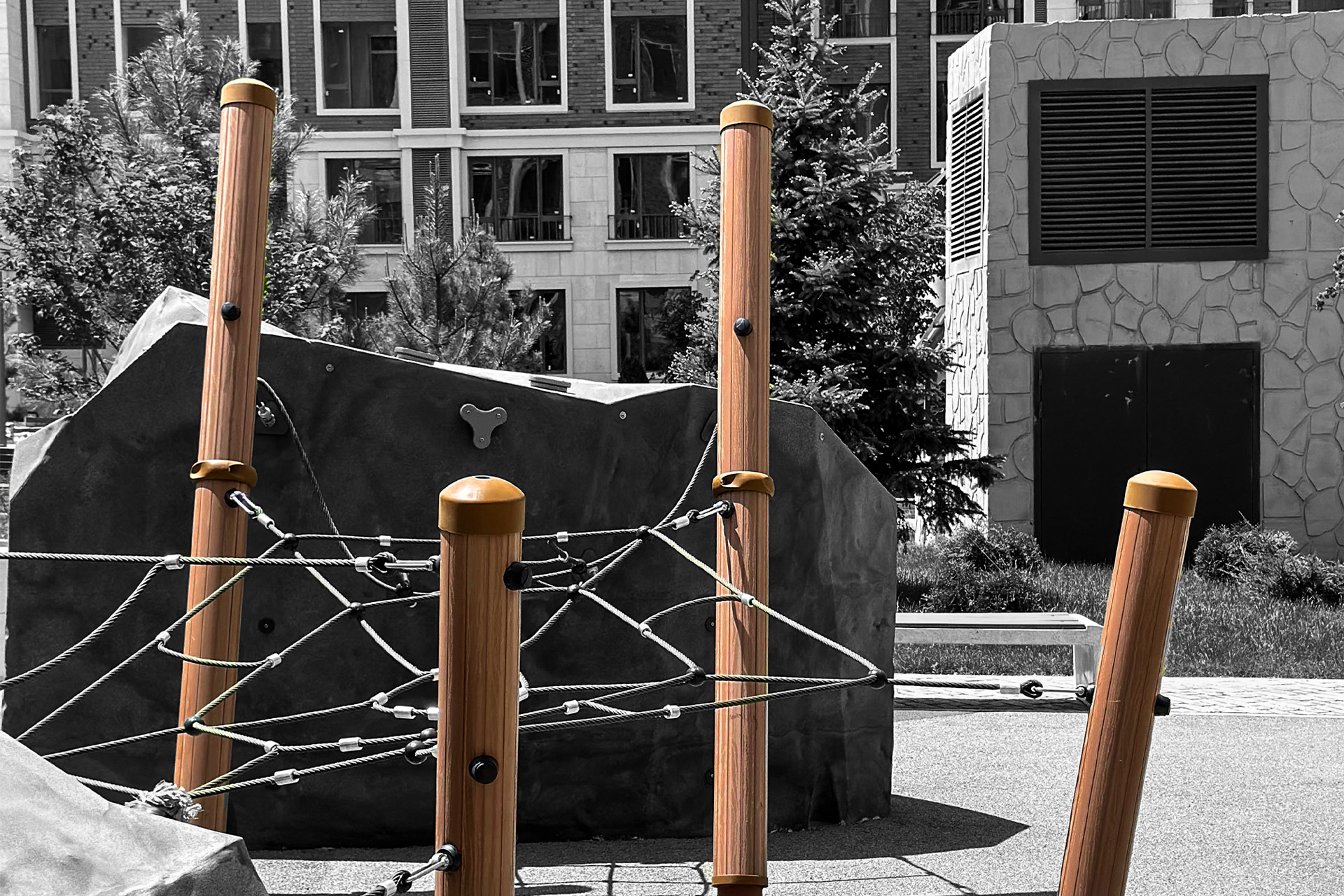
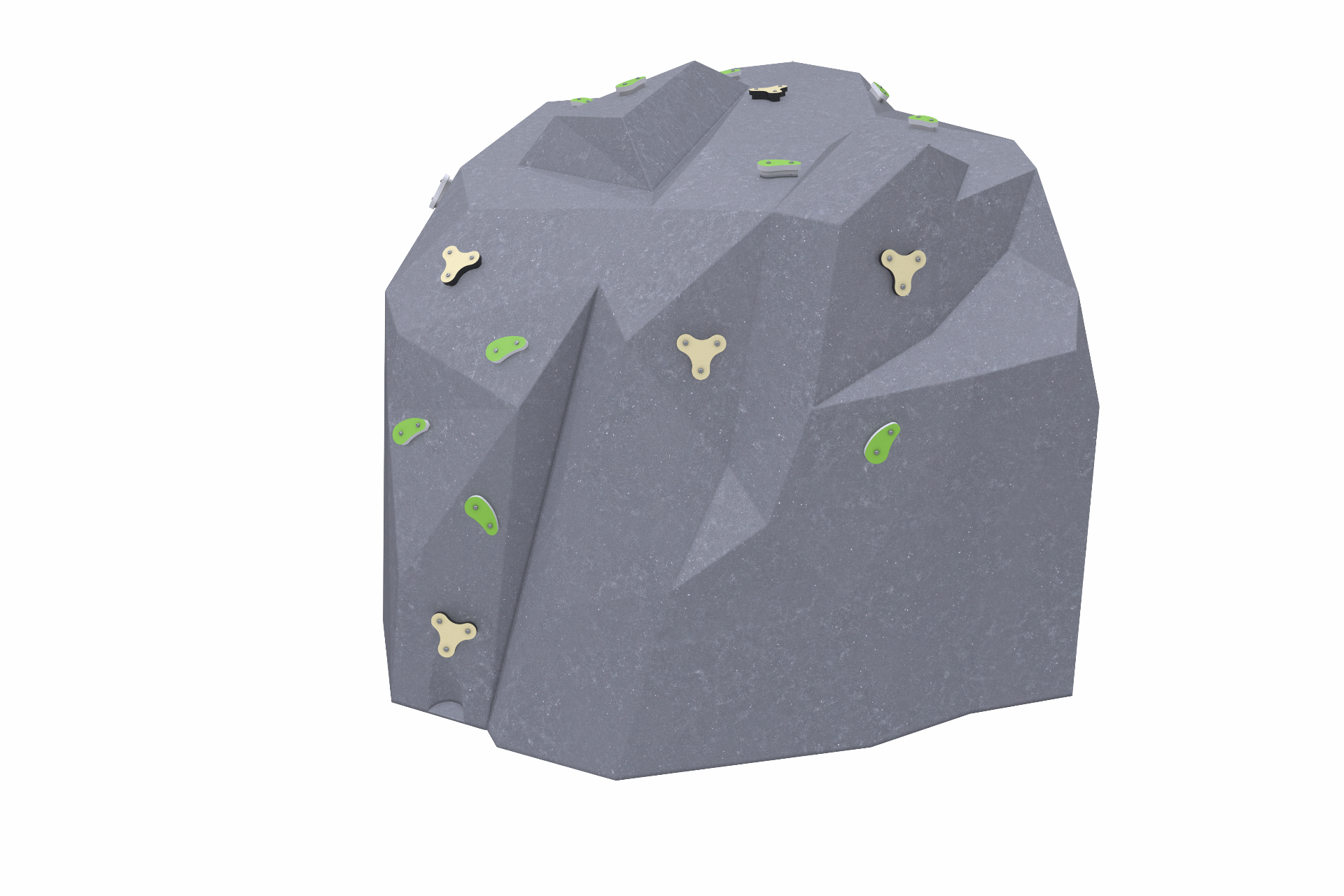
Tungsten climbing is looking like a rock climbing equipment. It consists of 4 main parts and thus has a modular structure. The pieces are designed to be used both independently and alone and also give a chance to binary combinations. Thus, it creates the opportunity to offer different alternatives for the field and needs.
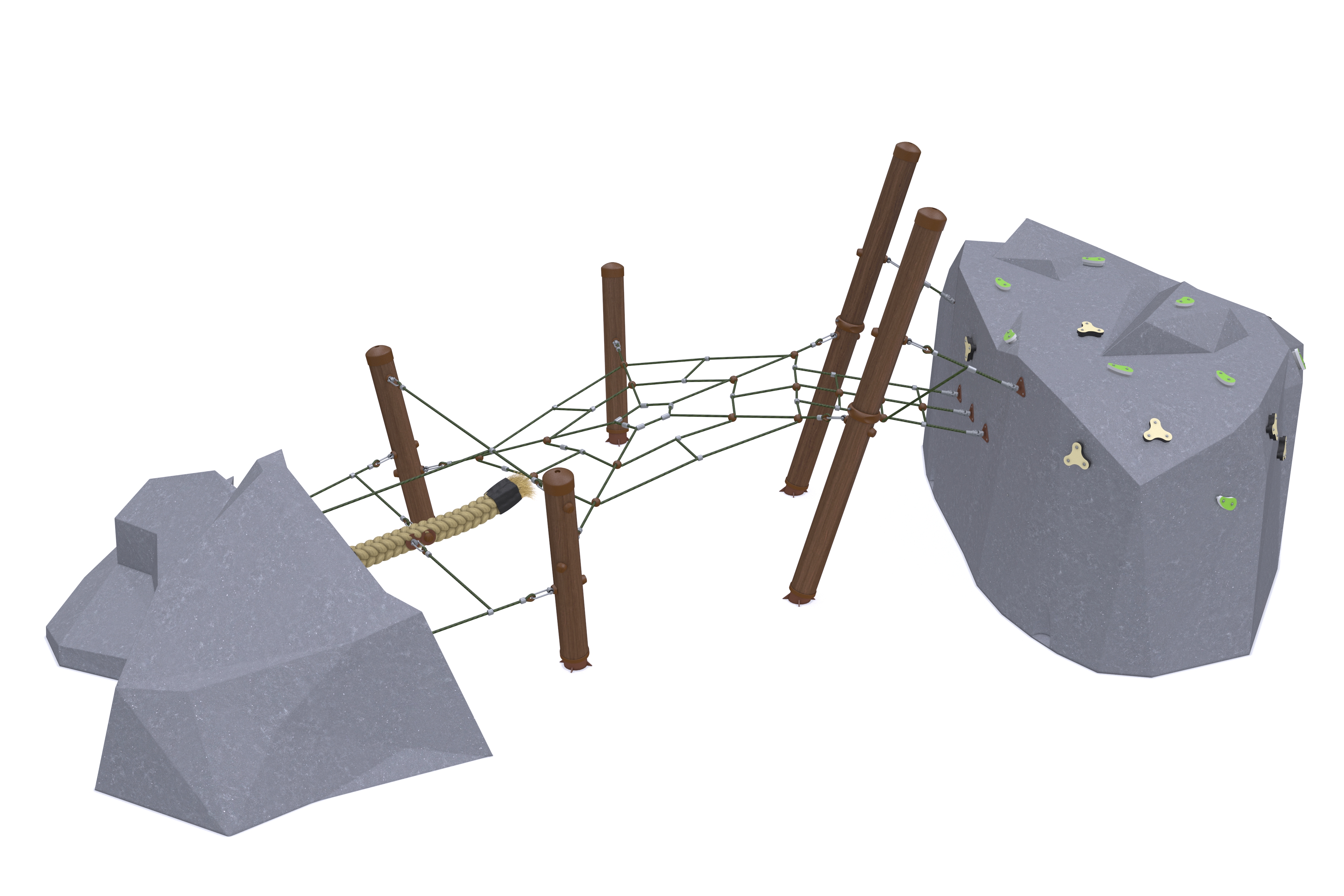
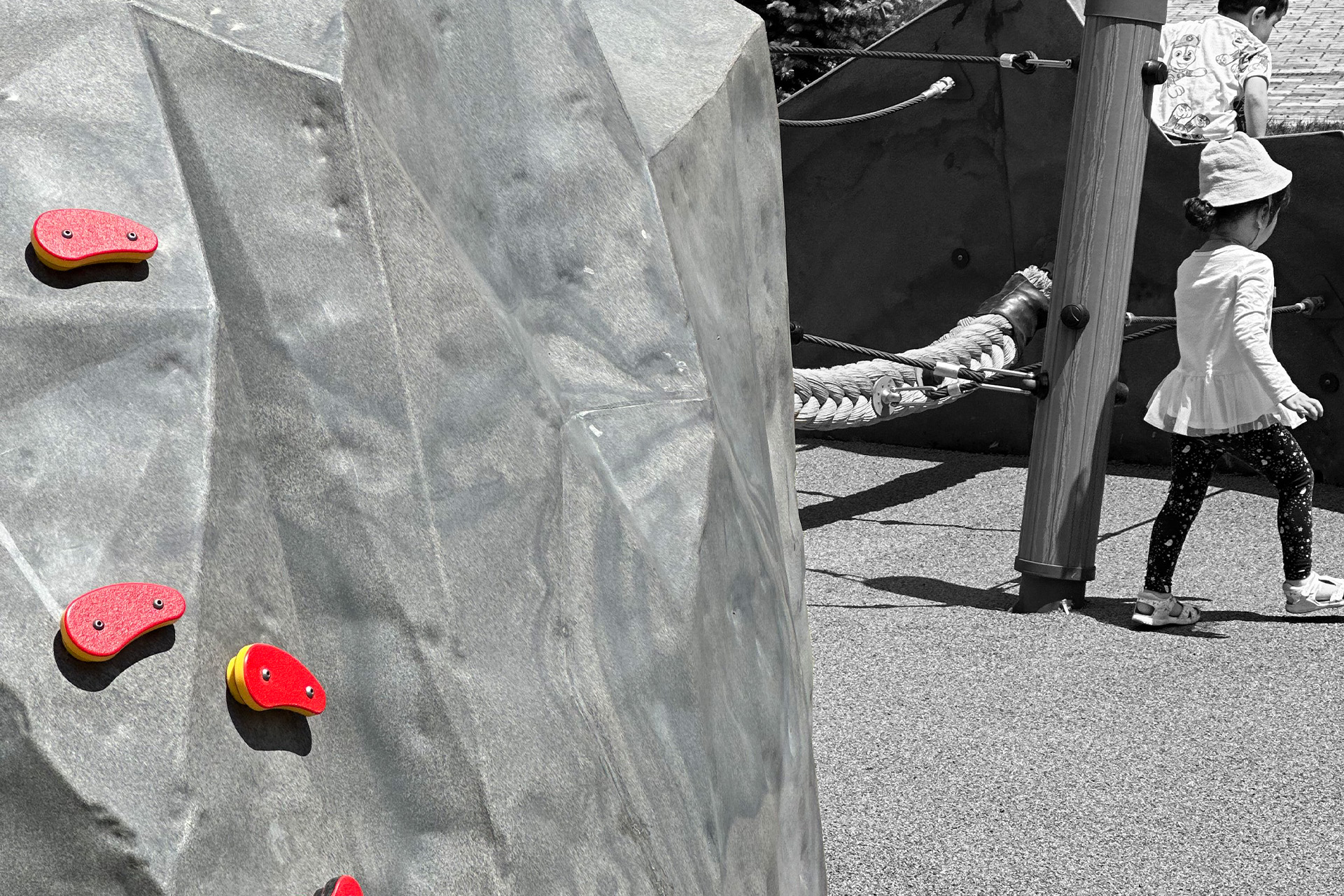
ca-1900-render-ca-1900-pers-2.jpg

Freestanding Playground Equipments / Modular Climbing Playgrounds

CA 1900

Modular Climbing Playgrounds
Polyethylene material

Polyethylene material

Rock climbing parts are made of self-colored polyethylene material. There will be some additional parts to hold and press on the surface to facilitate climbing

Composite Coating

Composite Coating

ST37 steel metal masts in these series are covered with 1” wooden composite which is made of %60 wooden chips, %35 polyethylene and %5binder. Composite coating not only protects the metal against corrosion, but also gives a natural look and feel. 95% of composite coating material is recyclable.

CmrRope

CmrRope

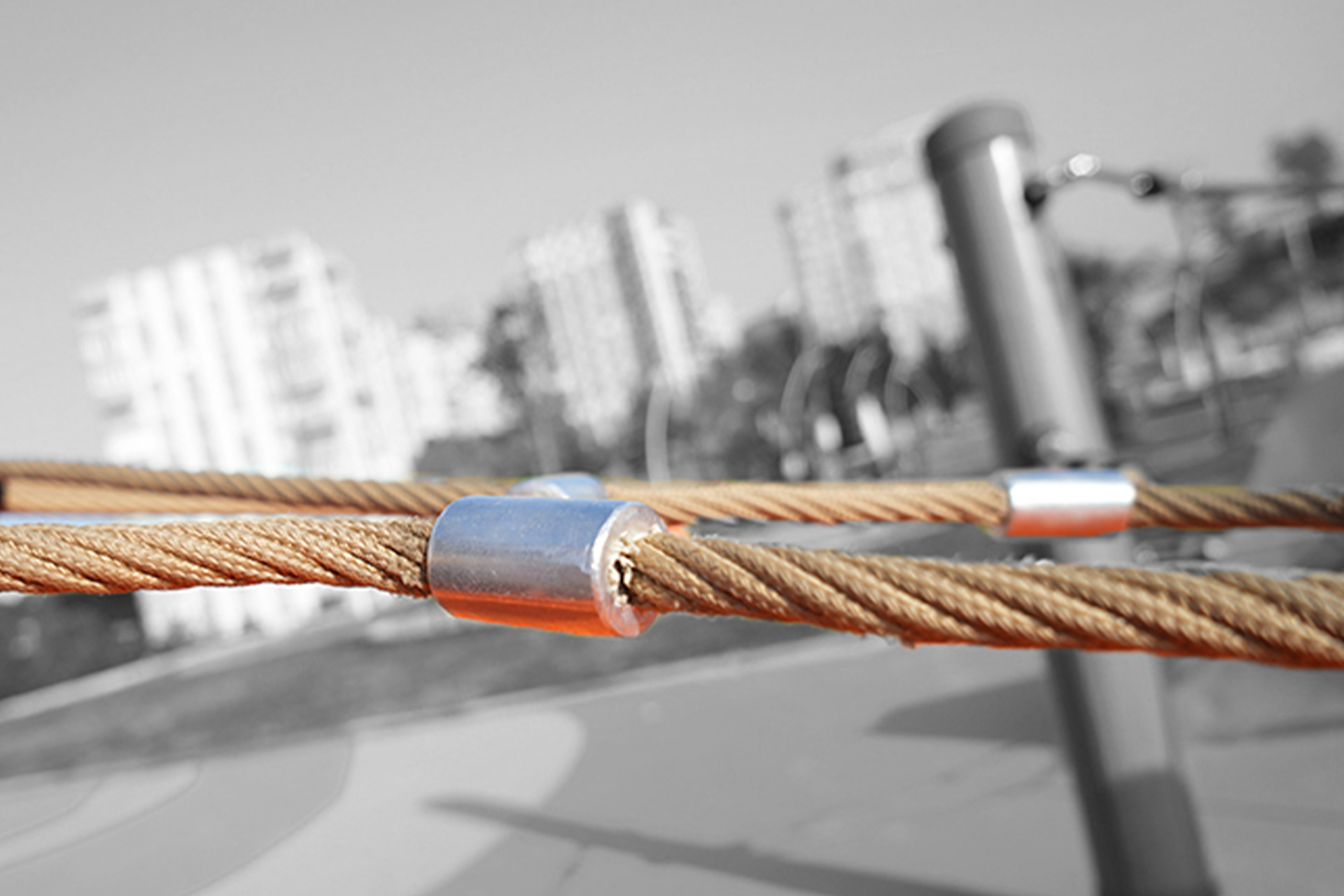
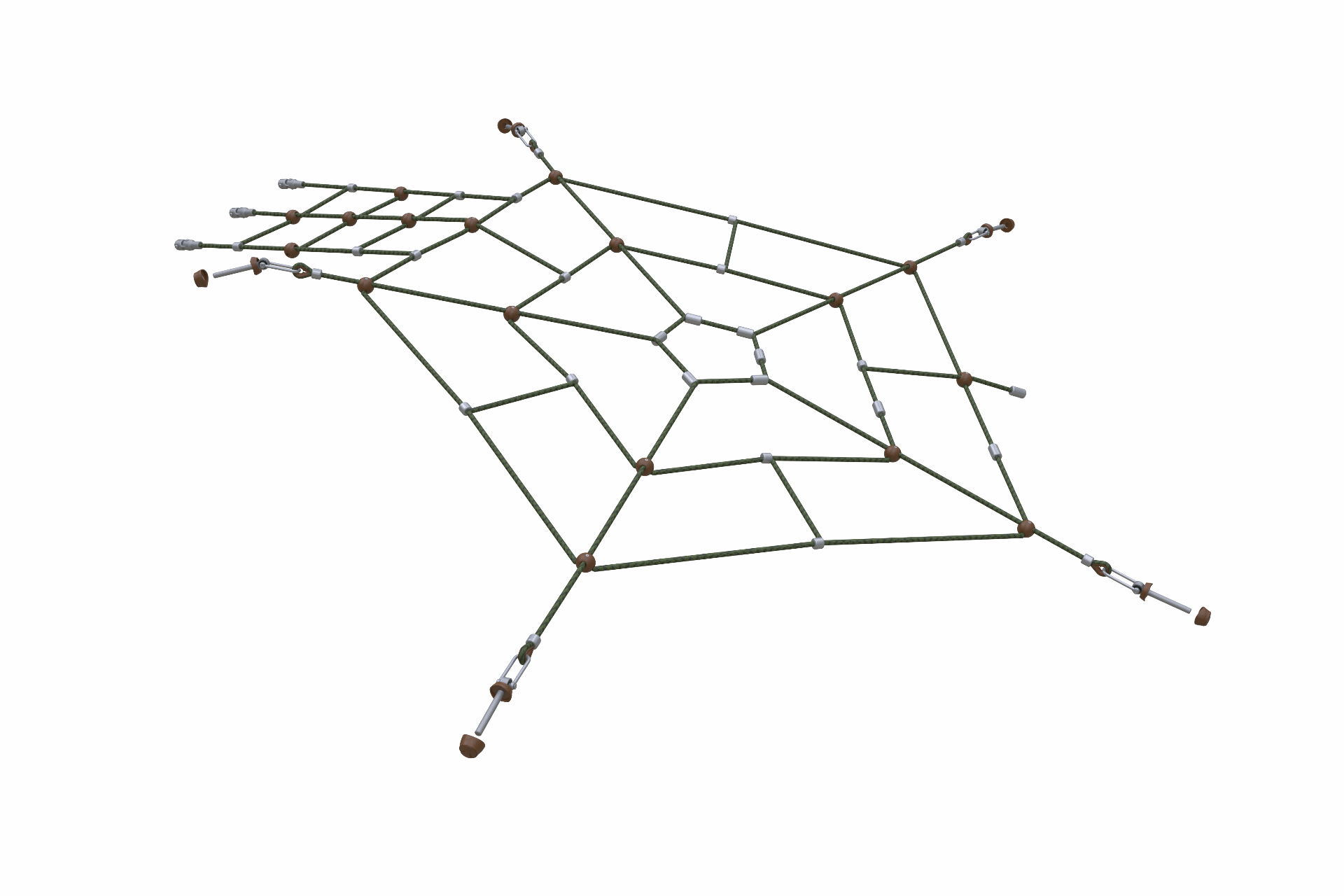
CmrRope ™ is formed by 6 strands of galvanized wires and a core either steel or fiber. Each strand is tightly braided with Polyester which is adhered to galvanized wires with a patented method to create a solid surface where polyester meets with wires. So extra protection is achieved against friction and vandalism. Surface is extremely abrasion and UV resistant also fire retardant.

Rope

Rope

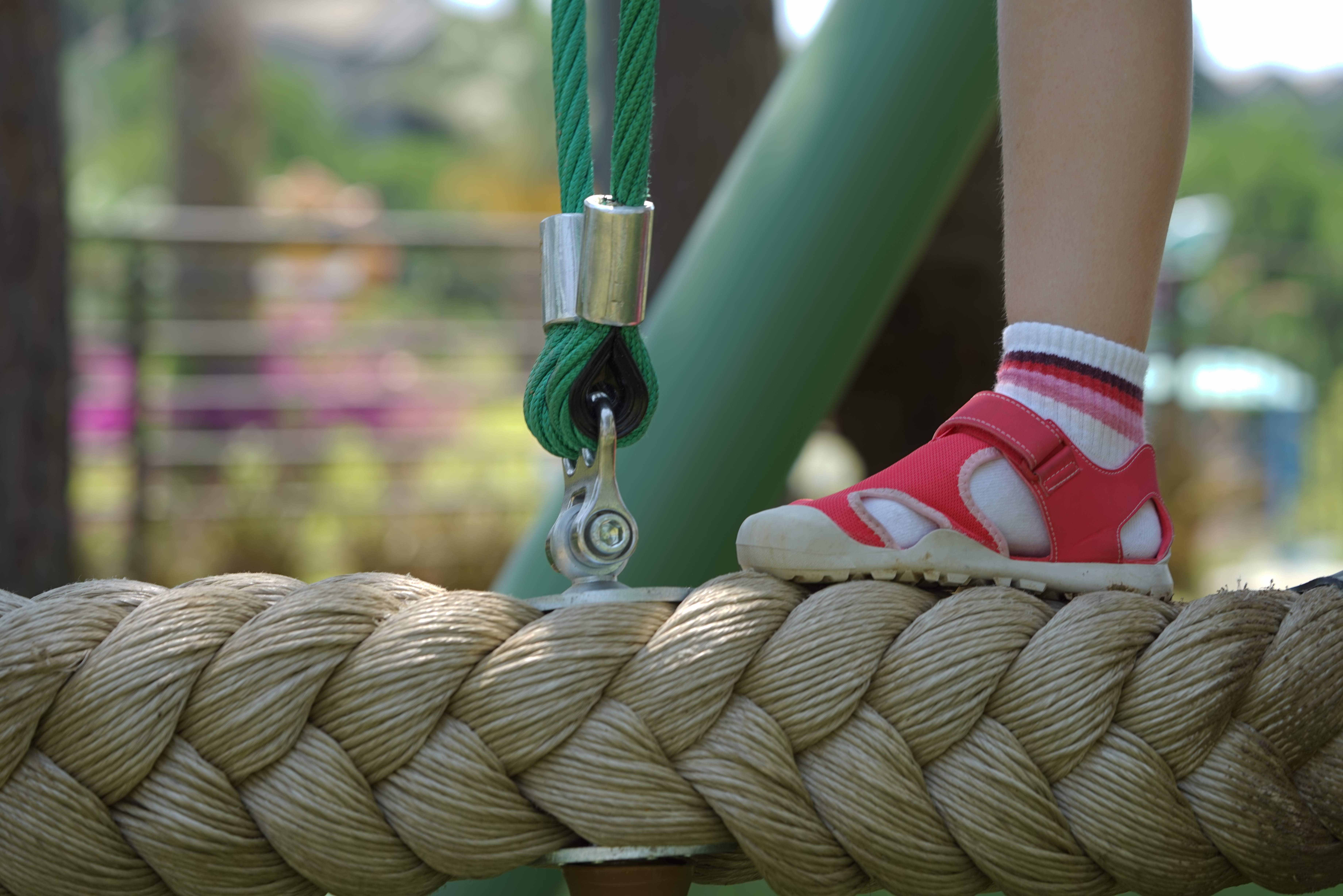
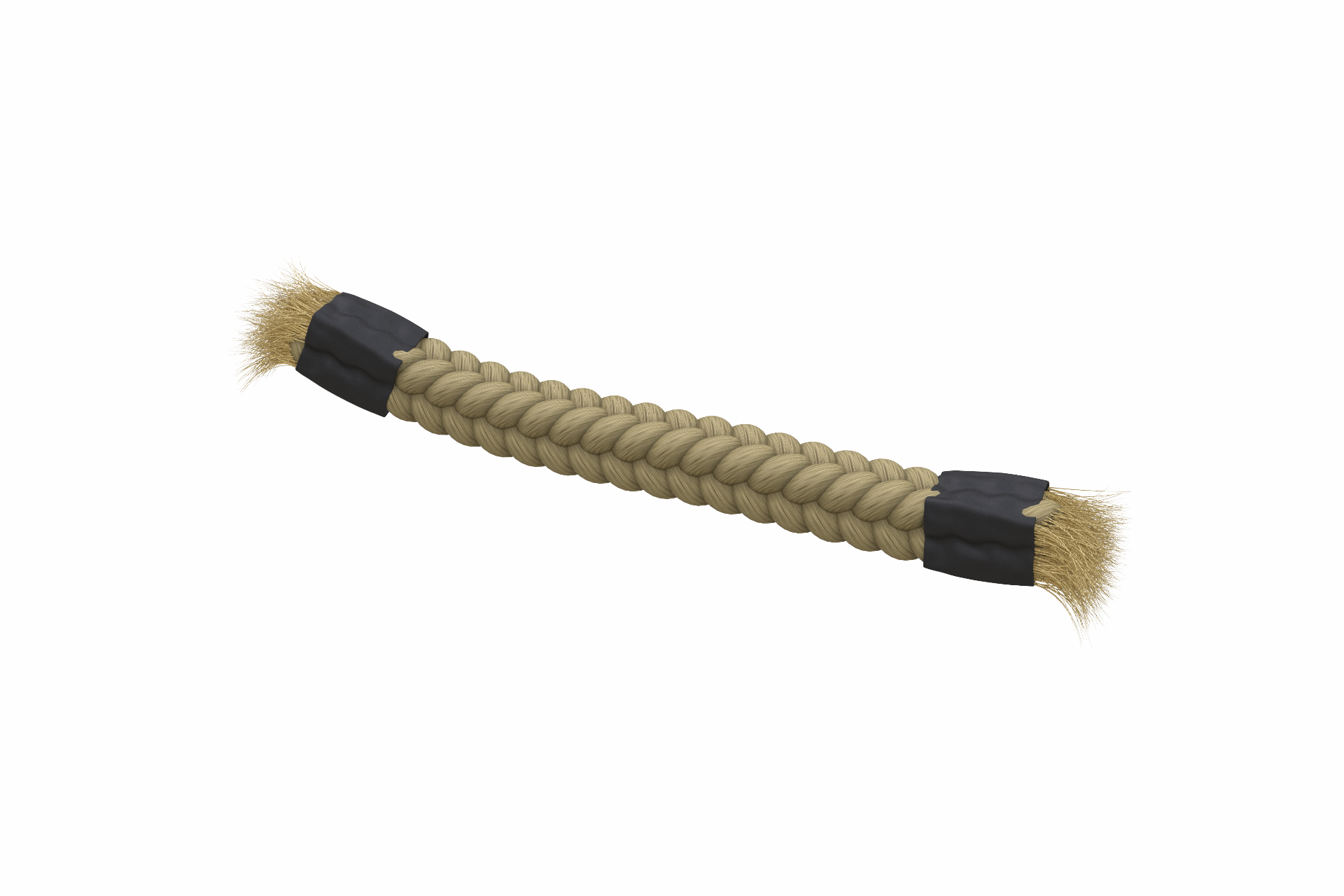
The rope used as a swaying station in the middle of the product should be made of 8 braids, forming in a square form, with a diameter of 140 mm and a minimum length of 550 cm, through which Ø10 mm steel winding rope passes inside

Cemer

Freestanding Playground Equipments / Modular Climbing Playgrounds

CA 1900

Modular Climbing Playgrounds
CA 1900_GUVENLIK.jpg
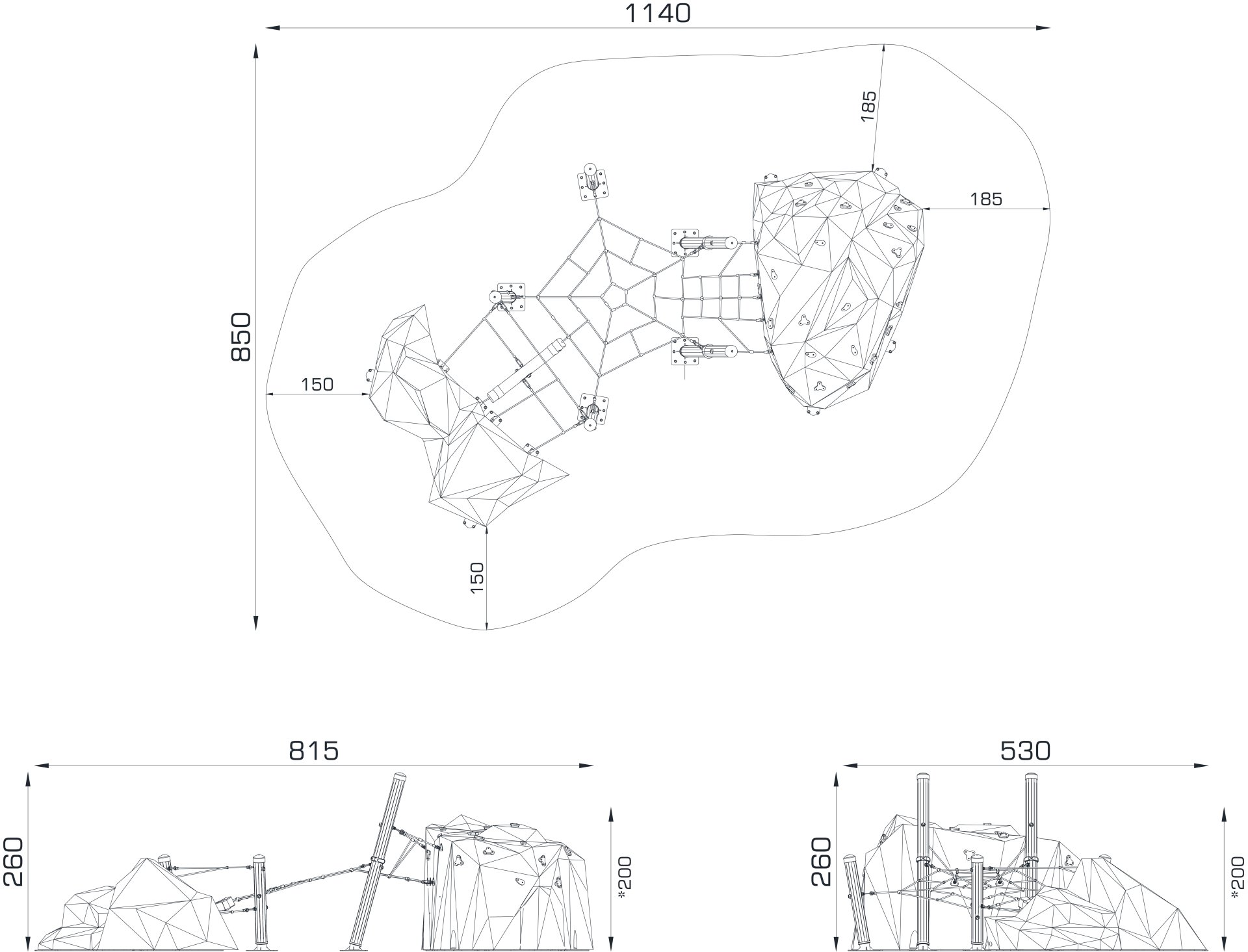
Front View
Side View

*Maximum Fall Height       Measurements shown are in centimeters.

Cemer

Freestanding Playground Equipments / Modular Climbing Playgrounds

CA 1900

Modular Climbing Playgrounds

FEATURED PLAY VALUES

Play Value - 1

Climbing

It increases physical endurance while improving motor skills and aiding hand-eye coordination. By providing children with a safe height experience in parks, it offers opportunities for exploration, creativity, and socialization.

Play Value - 2

Hemparope

It improves children's balance and coordination skills. By taking careful steps to maintain balance, children strengthen their motor skills and gain self-confidence. It provides children with an enjoyable play area.

Play Value - 3

Role Play/Climbing

The module, designed according to the theme, enhances imagination and creativity through role-playing games. It encourages socialization and teaches turn-taking.

Cemer

Freestanding Playground Equipments / Modular Climbing Playgrounds

CA 1900

Modular Climbing Playgrounds
Logo

Hanging

Gross motor skills involve large muscle movements like walking, jumping, and climbing. These skills are essential for balance and overall coordination.

Logo

Pull

Fine motor skills include precise movements using the hands and fingers, such as writing, cutting, or buttoning. They help children grasp and manipulate objects.

Logo

Rotate

Perception and awareness involve interpreting sensory information from the environment. They are foundational for attention, focus, and learning.

Logo

Balance

Perception and awareness involve interpreting sensory information from the environment. They are foundational for attention, focus, and learning.

Logo

Spin

Vestibular and proprioceptive input activate sensory systems responsible for balance, movement, and body awareness. They help children control body posture and motion.

Logo

Crawling

Fine motor skills include precise movements using the hands and fingers, such as writing, cutting, or buttoning. They help children grasp and manipulate objects.

Logo

Accessible

Empathy and emotional awareness involve recognizing one’s own emotions and understanding others’. These skills foster healthy social interactions.

Logo

Cooperation

Empathy and emotional awareness involve recognizing one’s own emotions and understanding others’. These skills foster healthy social interactions.

Logo

Interaction

Perception and awareness involve interpreting sensory information from the environment. They are foundational for attention, focus, and learning.

Logo

Push

Fine motor skills include precise movements using the hands and fingers, such as writing, cutting, or buttoning. They help children grasp and manipulate objects.

Logo

Slide

Perception and awareness involve interpreting sensory information from the environment. They are foundational for attention, focus, and learning.

Logo

Running

Gross motor skills involve large muscle movements like walking, jumping, and climbing. These skills are essential for balance and overall coordination.

Logo

Sound-Rhythm

Perception and awareness involve interpreting sensory information from the environment. They are foundational for attention, focus, and learning.

Logo

Sitting

Cooperation is the ability to work harmoniously with others towards a shared goal. It encourages teamwork and effective communication.

Logo

Role Play

Symbolic/dramatic play involves using imagination to imitate or act out scenarios. It supports emotional and social development through role-playing.

Logo

Rock

Gross motor skills involve large muscle movements like walking, jumping, and climbing. These skills are essential for balance and overall coordination.

Logo

Swing

Vestibular and proprioceptive input activate sensory systems responsible for balance, movement, and body awareness. They help children control body posture and motion.

Logo

Socialize

Cooperation is the ability to work harmoniously with others towards a shared goal. It encourages teamwork and effective communication.

Logo

Glide

Vestibular and proprioceptive input activate sensory systems responsible for balance, movement, and body awareness. They help children control body posture and motion.

Logo

Climbing

Gross motor skills involve large muscle movements like walking, jumping, and climbing. These skills are essential for balance and overall coordination.

Logo

Bouncing

Vestibular and proprioceptive input activate sensory systems responsible for balance, movement, and body awareness. They help children control body posture and motion.

Logo

Logical Reasoning

Problem solving is a cognitive skill where the child thinks, experiments, and finds solutions to challenges.